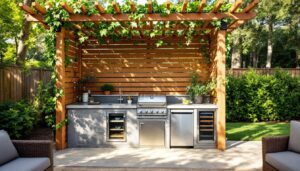
An outdoor kitchen island transforms your backyard into an entertainer’s paradise, and you don’t need a contractor’s budget to build one. Whether you’re flipping burgers for weekend guests or prepping meals al fresco, a DIY outdoor kitchen island gives you the functionality of a built-in setup without the $5,000+ price tag. This guide walks you through material selection, foundation planning, and installation steps so you can create a durable, practical island that fits your space and skill level. Most homeowners can tackle this project over a weekend or two with basic tools and careful prep.
Table of Contents
ToggleKey Takeaways
- A DIY outdoor kitchen island costs $2,000–$4,000 to build yourself, less than half the price of a contractor-built version, making it a budget-friendly home improvement project.
- Proper foundation is critical for longevity; a concrete slab is the gold standard and prevents settling, rot, and structural damage over time.
- Location matters significantly—choose level ground with minimal sun exposure and favorable wind patterns, and always call your utility locating service before construction.
- Use pressure-treated lumber and stainless steel fasteners exclusively, as regular materials will rust and rot within a few seasons regardless of sealant application.
- Select a countertop material based on maintenance tolerance; granite and concrete are affordable and durable, while stainless steel offers restaurant-grade performance with higher cost.
- Install a grill with proper clearances (36 inches from the back, 10 inches from the front edge) and ensure adequate ventilation behind and below appliances for safety and longevity.
Why Add an Outdoor Kitchen Island to Your Backyard
An outdoor kitchen island brings convenience and entertainment value to your outdoor living space. Instead of running back and forth to your indoor kitchen, you’ve got counter space, storage, and appliances right where your guests are gathered. It also bumps up your home’s resale appeal, outdoor kitchens consistently rank high on buyer wish lists.
Beyond function, an island anchors your outdoor area, creating a natural gathering spot. It lets you socialize while cooking, keeps kids entertained during prep, and eliminates the “disappearing host” syndrome. From a practical standpoint, you’ll use it year-round: grilling season is obvious, but outdoor islands work for holiday prep, cooler storage, and even coffee service in spring and fall.
The cost-benefit math works in your favor, too. A modest island with a grill, counter, and storage costs $2,000–$4,000 to build yourself. A contractor-built version? Double or triple that. You’ll recoup much of the investment through enjoyment and modest home value gains.
Essential Materials and Tools You’ll Need
Materials List
- Lumber: Pressure-treated 2×8s or 2×10s for framing, 4×4 posts for structural supports
- Countertop material: Granite (natural or remnant), concrete, stainless steel, or composite decking
- Grout and mortar: If using tile or stone facing
- Stainless steel appliances: Built-in grill (most common), side burner, or cooktop
- Hardware: Galvanized bolts, lag screws, stainless steel fasteners (resists rust)
- Concrete base: 4,000 PSI, pea gravel, and concrete mix (if pouring a footing)
- Adhesive and sealant: Outdoor-rated construction adhesive, waterproof sealant
Tools Required
- Circular saw or miter saw (for clean angle cuts)
- Drill-driver with bits
- Level (4-foot minimum)
- Measuring tape (25-foot)
- Square (framing and speed square)
- Shovel and wheelbarrow (for footing prep)
- Safety gear: safety goggles, work gloves, dust mask, and hearing protection
- Optional but helpful: Kreg jig (for pocket hole joinery), reciprocating saw, impact driver
You’ll also want to rent or borrow a concrete mixer if pouring a footer, or hand-mix smaller quantities. Pressure-treated lumber is non-negotiable for outdoor framing, regular lumber will rot within a few seasons, no matter how much sealant you apply.
Choosing the Right Location and Size
Placement matters more than most DIYers realize. First, scout your yard for level ground, or at least ground with minimal slope. An island on a 10-degree slope will eventually settle unevenly and crack. If you love a particular spot but it slopes, you can build up the lower side with gravel and compacted soil, but it’s easier to avoid slopes altogether.
Think about sun exposure and wind patterns. A west-facing island will get hammered by afternoon heat, making metal appliances uncomfortable to touch (and your guests uncomfortable to linger). An east or north-facing spot stays cooler. Wind matters too, a heavy crosswind will push smoke from your grill away from guests, which sounds nice until you realize you’re cooking for an hour downwind of your own equipment.
Size should balance usability with your space. Most backyard islands run 3 to 5 feet long and 2 to 3 feet deep. This gives you room for a grill, side counter, and storage without dominating a small yard. Measure out the footprint with rope or chalk and live with it for a day. Walk around it. Imagine where guests stand. Too small feels cramped: too large crowds your entertaining area.
Clear utilities before breaking ground. Call your local utility locating service (usually free in the US) to mark buried gas, electric, and water lines. Hitting a line is costly and dangerous.
Building the Frame and Base Structure
Foundation Options for Stability
Your foundation determines how long your island lasts. Three proven options:
Concrete slab: The gold standard. Dig out 6–8 inches of soil, lay down 4 inches of pea gravel (for drainage), then pour 4,000 PSI concrete, about 4 inches thick. Let it cure for 7 days before building on it. This costs $200–$400 depending on size but prevents settling and rot.
Gravel and pavers: Quicker and cheaper (~$100) but less stable long-term. Dig out 4 inches of soil, lay landscape fabric, compact pea gravel, and set down 2-inch thick pavers. Works for dry climates: in rainy areas, moisture creeps under and rots your framing.
Adjustable post bases on soil: Drive galvanized metal footings deep into the ground (18–24 inches) and bolt your posts to them. Allows you to level the structure afterward, but requires digging and is most forgiving on uneven terrain.
Framing the Box
Once your foundation is set, build the frame. Start with a perimeter of pressure-treated 2×8s (actual depth ~7.5 inches), using galvanized bolts to connect corners. Brace the interior with 4×4 posts at corners and every 3 feet along the length. This prevents racking (twisting) under appliance weight and wind load.
Use a level constantly. Even a quarter-inch slope across the top surface will cause water pooling and eventually structural damage. Check diagonal measurements corner-to-corner: they should be equal if the frame is square.
If you’re adding a storage cabinet or grill bay, frame that section now. Build in ventilation behind the grill, inadequate airflow creates heat pockets that can warp metal or damage adjacent materials. Leave at least 2 inches of clearance behind and 4 inches below the grill for air circulation and safety.
Fasten everything with stainless steel or galvanized bolts and screws. Regular steel will rust within a season, staining your island and weakening joints.
Adding Countertops and Work Surfaces
Your countertop sees intense use, high heat from grills, spills, prep work, and weather exposure. Material choice affects both durability and maintenance.
Granite (natural or remnant): Durable, heat-resistant, and classic looking. Remnant pieces, leftovers from kitchen countertop jobs, cost $200–$600 for a small island, versus $1,500+ for new slabs. Seal it annually to prevent staining. Installation requires leveling the frame dead-flat and using construction adhesive and supporting brackets underneath.
Concrete: Affordable ($150–$300) and customizable. You can tint it, embed decorative elements, or etch patterns. It requires a food-safe sealer and resealing every 1–2 years. Hairline cracks are cosmetic but accelerate water infiltration if you don’t reseal promptly.
Stainless steel: Restaurant-grade, non-absorbent, and easy to clean. Expect $300–$600 installed. Scratches show, and it conducts heat, hot foods will scorch bare steel. Most outdoor islands pair stainless with a sealed wood or concrete surround.
Composite decking: Plastic-lumber countertops are low-maintenance and splinter-proof but can sag under heavy weight (like a full grill). Use it for non-grilling sections only.
Whichever you choose, slope the surface very slightly (1/8 inch per foot) toward drainage points so water doesn’t pool. Overhang the countertop 1–2 inches past the frame on all sides, it sheds water away from the structure and makes the island look intentional, not like a plywood box.
Installing Appliances and Features
Grill installation is straightforward if you plan ahead. Most built-in grills come as drop-in units: you measure the opening, cut a rectangle in your countertop (use a jigsaw for clean curves), and lower the grill in. Secure it with the mounting brackets supplied, ensuring it’s level front-to-back.
Check clearances before buying. Your grill should sit at least 36 inches from the back of your island and 10 inches from the front edge. Heat deflectors behind the grill prevent damage to adjacent surfaces. Gas grills need a regulator line running to a propane tank (mounted away from high heat). Electric grills are simpler but require a weatherproof GFCI outlet.
If you’re adding a side burner or mini-fridge, treat it like the grill: plan the opening, install mounting brackets, and verify power/gas lines are accessible. Undersized fridges (compact models, 3–5 cubic feet) are common in outdoor islands because they fit between standard appliance gaps.
Storage is where many DIY islands shine. Build cabinet boxes under the counter using pressure-treated plywood and stainless steel hardware. Use marine-grade hinges and latches, they resist rust better than standard hardware. Insulate the interior with foam board to keep a built-in cooler functioning efficiently.
Finishing touches include caulking all seams with outdoor-rated sealant (silicone, not latex), installing a light above the grill (string lights, pendant, or a mounted LED fixture on a 15-amp GFCI circuit), and adding handles or knobs to cabinet doors. Let all sealers cure fully (follow manufacturer times) before exposure to weather or heavy use. Most outdoor-rated products cure in 24–48 hours, but don’t rush it, premature stress leads to failure.
<h2 id="” data-id=””>
A well-built outdoor kitchen island becomes your backyard’s social hub. You’ve invested sweat equity instead of contractor dollars, and you understand every joint and corner because you built it. Start with a solid foundation, don’t skimp on pressure-treated framing, and choose a countertop material you’re willing to maintain. Your island will serve family dinners and backyard parties for years, and the next time someone asks how you pulled it off, you’ll have a good story to tell.