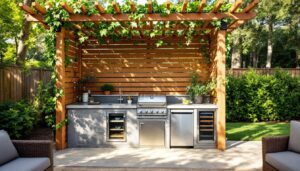
An outdoor kitchen and bar transforms your backyard into a destination for cooking, gathering, and entertaining year-round. Whether you’re hosting weekend barbecues or weekend dinners, a well-designed outdoor kitchen eliminates the back-and-forth trips to your indoor kitchen and keeps you present with guests. The 2026 outdoor kitchen landscape offers options ranging from sleek modern setups to rustic stone retreats, each designed for different styles and budgets. Before diving into any build, assess your space, climate, and how you actually entertain. A thoughtful layout saves time, materials, and frustration down the line.
Table of Contents
ToggleKey Takeaways
- An outdoor kitchen and bar transforms your backyard into a year-round entertaining destination while eliminating trips to your indoor kitchen and keeping you present with guests.
- Modern minimalist outdoor kitchens use stainless steel appliances, sealed concrete or porcelain countertops, and built-in storage to create a sophisticated, low-maintenance space.
- Rustic stone and wood designs work best with locally sourced materials and proper drainage; wood counters require re-sealing every 2–3 years and stone should avoid sandstone in freeze-thaw climates.
- Multi-zone layouts divide your backyard into distinct cooking, bar, and dining areas with proper spacing (at least 3 feet between zones) and path lighting to safely accommodate multiple guests.
- Weatherproofing is essential for longevity—slope all surfaces for drainage, use marine-grade hardware, install frost-line footings, and winterize plumbing in cold climates to extend your outdoor kitchen’s lifespan to 15+ years.
- Design your outdoor kitchen based on actual entertaining habits and climate conditions rather than Pinterest inspiration; prioritize drainage and structural integrity over aesthetics for lasting value.
Modern Minimalist Kitchen Setup With Stainless Steel Appliances
A modern minimalist outdoor kitchen centers on clean lines, concealed storage, and high-quality stainless steel components. The aesthetic appeals to homeowners who want a sophisticated extension of their indoor living space without clutter or visual noise.
Start with a stainless steel grill, burners rated for 40,000+ BTUs handle most entertaining demands, and sealed burners resist debris and rusting. Pair it with a stainless steel sink (16- or 18-gauge material resists denting) plumbed to a dedicated outdoor line, ideally with hot water. Add a mini fridge or beverage cooler built flush into the counter to hide utilities from sight.
For countertops, polished concrete or sealed porcelain tiles in neutral tones complement the minimalist vibe. Avoid white or light colors if you cook frequently, grease splatter shows immediately. Concrete requires sealing every 1–2 years: porcelain is lower-maintenance but needs proper base support to prevent cracking under freeze-thaw cycles in cold climates.
Storage is key: use outdoor-rated stainless steel cabinets with drains built into the base. Moisture trapping in enclosed spaces causes rust and rot, so ensure proper ventilation behind cabinet backs. Lighting matters too, recessed LED strips mounted under upper cabinets eliminate shadows on the cooking surface and work year-round without warming your prep area.
Rustic Stone And Wood Bar Counter Design
A rustic stone and wood bar invites a warm, approachable vibe perfect for casual entertaining. This style works especially well in wooded or rural settings where it feels part of the landscape rather than imposed on it.
Choose locally sourced stone, stacked fieldstone, slate, or limestone adds character and typically costs less than imported materials. Lay it dry-stack or mortared, depending on climate: in freeze-thaw zones, avoid sandstone (it spalls when water penetrates and freezes). The bar counter itself can be live-edge wood topped with a food-safe finish, or opt for a split timber slab sealed with exterior polyurethane. Wood requires re-sealing every 2–3 years and rots if water pools on top, so slope the surface slightly for drainage.
Built-in seating with stone or wood bases and weather-resistant cushions extends the bar’s functionality. Rough-sawn wood beam supports add rustic authenticity without sacrificing structural integrity. For a rustic bar setup, consider a wooden keg or barrel converted into a cooler, functional and photogenic.
Lighting should feel organic: Edison-style string lights strung overhead or lantern sconces mounted on stone pillars echo the natural aesthetic. Avoid harsh LED work lights here: they compete with the relaxed mood you’re creating.
Built-In Grilling Station With Prep Area
A dedicated grilling station prioritizes cooking workflow, separating prep from finished cooking and service. This layout works for households that entertain frequently and need multiple cooks working simultaneously.
Arrange it in zones: a cold prep zone (counter, sink, cutting space) roughly 3 feet wide on one side of the grill, the grill itself in the center, and a plating and serving area on the opposite side, also 3 feet wide. This 9-foot footprint allows two people to work without colliding. Use stainless steel or sealed wood counters for cold prep: wood feels warmer and is easier on knives, but stainless wins for durability and cleanup.
The grill itself should have a weather-resistant hood to protect from rain and debris when not in use. A side burner (typically 15,000 BTUs) lets someone warm sauces or prep side dishes without monopolizing the main grill. Ensure the grill is mounted on a stable concrete pad, gravel or sand shifts under weight and vibration, throwing off grate alignment and creating safety hazards.
Storage underneath the grill, a drawer or cabinet with stainless hardware, keeps tools and serving platters within arm’s reach. If your climate has wet winters, install a floor drain beneath to prevent standing water. Proper grading around the station (slope away from the structure) also prevents pooling.
Tropical Tiki Bar Aesthetic
A tropical or tiki-inspired bar brings resort energy to your backyard, complete with a relaxed, vacation-like atmosphere. This style thrives in warm climates or as a seasonal escape even in cooler regions.
The essentials: a thatch or pergola roof overhead for shade, tiki torches or faux lanterns for ambient lighting, and a wooden bar counter with plenty of seating. Use materials that echo tropical settings, weathered wood for the bar frame, rope or rattan accents, and vibrant tile or mosaic details on the counter fascia. A built-in cooler for beer and beverages is almost mandatory here.
Plants are part of the décor: potted palms, bird of paradise, or hibiscus in large containers frame the space without requiring in-ground installation (easier for renters or those planning flexibility). A decorative water feature, a simple fountain or recirculating waterfall behind the bar, adds sound and cooling effect without plumbing complexity.
For a tiki bar, don’t overthink furnishings. Wicker or rattan bar stools with weather-resistant cushions, tiki masks or surfboard wall art, and shell or coral accents all support the theme naturally. String lights (especially warm-white for that sunset glow) and a small Bluetooth speaker tucked into a weatherproof box complete the escape. If you live in a freeze-thaw zone, bring moveable décor and plants indoors in winter: permanent installations may not survive the season intact.
Multi-Zone Layout For Cooking And Entertaining
A multi-zone layout divides your outdoor space into cooking, dining, and lounging areas, maximizing the use of your backyard and keeping foot traffic organized. This approach works best on larger properties (at least 20 feet of usable space) and scales efficiently as your entertaining needs grow.
Zone 1: Cooking zone should sit upwind of seating areas (smoke won’t drift into guests’ faces). House your grill, prep counter, and sink here on a concrete pad at least 4 inches thick, reinforced for freeze-thaw stability. Overhead shelter (pergola or roof structure) protects both the cook and appliances from rain.
Zone 2: Bar or beverage station sits between cooking and dining for easy restocking. A simple counter with a cooler, glassware, and bottles doesn’t require plumbing, making it flexible to relocate if needed. Island-style placement (accessible from multiple sides) encourages mingling without bottlenecking.
Zone 3: Dining or seating area should be 10–15 feet downwind from the grill and in shade during your typical entertaining hours (think afternoon sun angles in summer). A sturdy outdoor dining table or lounge seating under a pergola or under existing trees defines the space.
Connecting paths between zones should be level, non-slip, and at least 3 feet wide to prevent tripping when guests carry plates or drinks. Pavers, composite decking, or sealed concrete all work, just avoid loose gravel in high-traffic areas. Lighting is critical in multi-zone layouts: path lights between zones, task lighting at the cooking station, and ambient lights in seating areas let entertaining flow after dark without safety compromises.
Essential Materials And Weatherproofing Tips
Weatherproofing is the difference between a backyard kitchen that lasts 5 years and one that lasts 15. Outdoor conditions, UV exposure, moisture infiltration, thermal cycling, degrade materials faster than indoor environments.
Countertops: Sealed concrete, porcelain, or stainless steel outperform natural stone in wet climates. If using wood, apply food-safe exterior sealant (polyurethane or water-based finishes) every 2 years. Avoid bare wood and composite decking as counter surface: they splinter and rot. Slope all horizontal surfaces 1/4 inch per foot toward drainage to prevent pooling.
Appliances and hardware: All-stainless steel resists rust longer than painted or powder-coated steel. For moving parts (hinges, handles), marine-grade or hot-dip galvanized hardware outlasts standard hardware. Grill covers (heavy-duty vinyl or canvas) protect when not in use but ensure proper air circulation underneath to prevent rust.
Structural support: All permanent structures, grills, counters, pergolas, must sit on concrete footings below the frost line in freeze-thaw climates (typically 24–48 inches deep, depending on your region). Frost heave (ground expanding when water freezes) lifts structures out of level and cracks connections. Consult your local building authority for frost-line depth.
Plumbing: Run water lines in insulated conduit or bury them below the frost line if running year-round. Shut-off valves accessible from inside the house let you winterize outdoor plumbing in cold climates. Drain all lines before the first freeze to prevent burst pipes. Drainage around the structure, graded soil, perimeter drains, prevents water from pooling at the base. Many homeowners discover this lesson the hard way after one soggy winter.
Conclusion
Building an outdoor kitchen and bar isn’t a weekend project, but it’s one of the highest-ROI home improvements for lifestyle and entertaining value. Start with your actual needs, how often do you cook outdoors, how many guests do you typically host, and what’s your climate’s seasonal reality? Design around those facts, not Pinterest dreams. Whether you choose sleek modern or rustic charm, prioritize weatherproofing, proper drainage, and solid foundations: those unglamorous details determine longevity. Your backyard kitchen will reward you with years of gatherings, good food, and space where people naturally want to linger.